10-Day Balkan Itinerary: 5 Countries from Croatia to North Macedonia
A 10-day Balkan itinerary through Croatia, Bosnia and Herzegovina, Montenegro, Albania and North Macedonia: Dubrovnik, Mostar, Sarajevo, Kotor, Tirana, Lake Ohrid and Skopje.

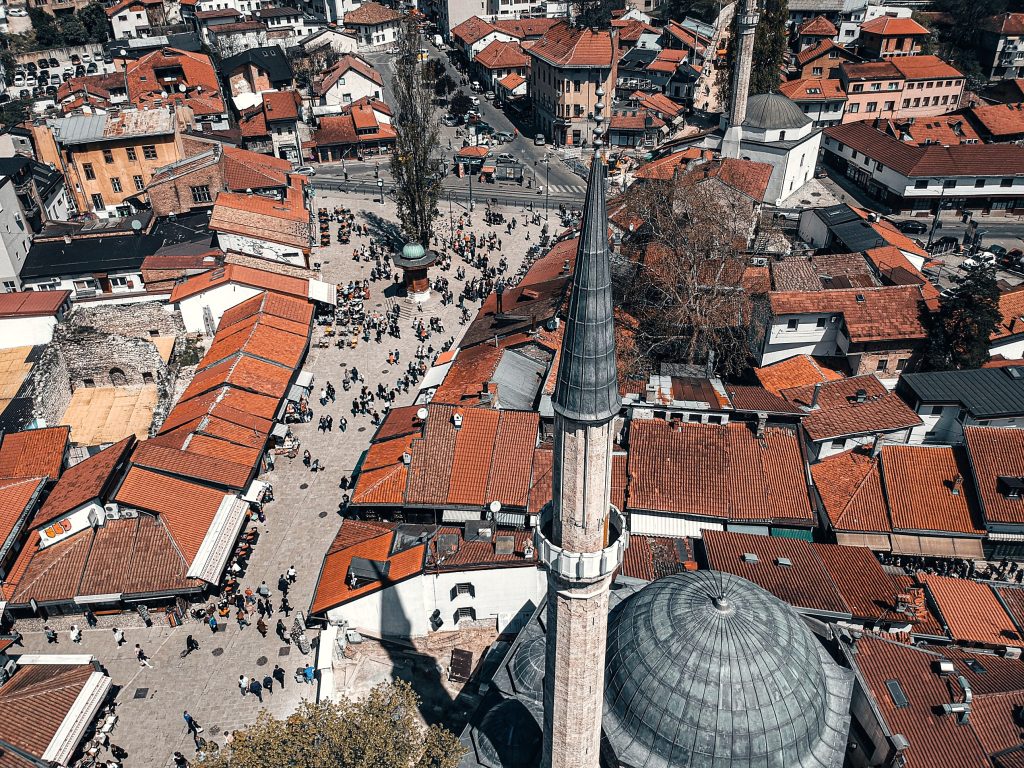
Seven days is enough to see five Balkan countries if the route runs in one direction. Start in Sarajevo, follow the Neretva river to Mostar, drop down to the Adriatic at Dubrovnik and the Bay of Kotor, then cross Albania to Tirana and Lake Ohrid before finishing in Skopje. That is about 940 km of driving, split into short legs of two to four hours.
This guide explains every stop on that route: what each place is, why it is worth the time and what you actually do there. It follows the itinerary of our 7-Day Balkan Tour: 5 Countries, and you can use it to plan the trip on your own too.
Recommended tour
7-Day Balkan Tour: 5 Countries
7 days · Sarajevo to Skopje · from €1,950 per person · 4-star hotels
View tourKey takeaways
| Day | Route | Country | Distance | Overnight |
|---|---|---|---|---|
| 1 | Arrival in Sarajevo | Bosnia and Herzegovina | – | Sarajevo |
| 2 | Sarajevo – Mostar – Blagaj – Kravica – Neum | Bosnia and Herzegovina | 250 km | Neum |
| 3 | Neum – Dubrovnik – Kotor – Budva | Croatia, Montenegro | 180 km | Budva |
| 4 | Budva – Tirana | Albania | 200 km | Tirana |
| 5 | Tirana – Ohrid | North Macedonia | 130 km | Ohrid |
| 6 | Ohrid – Skopje | North Macedonia | 180 km | Skopje |
| 7 | Departure from Skopje | North Macedonia | – | – |
Why we run this route one way
Most Balkan round trips start and end in the same city, which means driving the same road twice. Starting in Sarajevo and ending in Skopje saves about a day of driving, and you fly home from Skopje instead of going back to the coast. It also puts the longest drive on day 2, when everyone is still fresh.
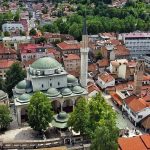
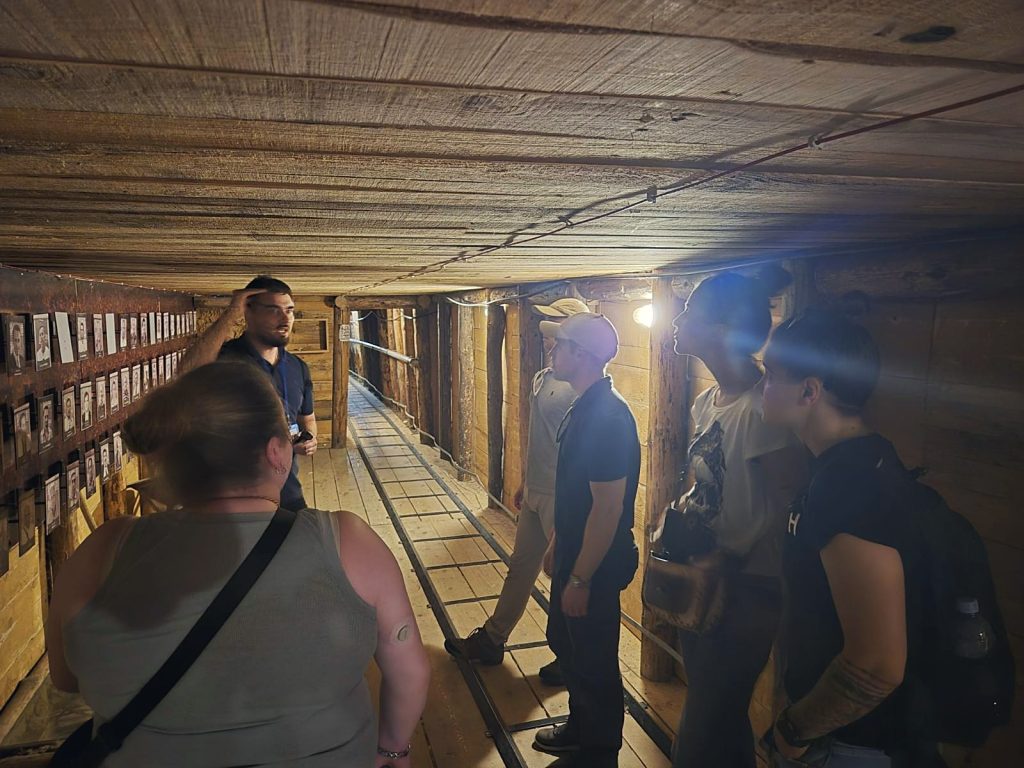
Sarajevo is the capital of Bosnia and Herzegovina and the best place to start a Balkan trip, because it explains the region in one city. In a ten-minute walk you pass an Ottoman bazaar, a Catholic cathedral, an Orthodox church and a synagogue, which is why Sarajevo is often called the “European Jerusalem”.
On the first day you see three sides of the city:
If you can, arrive a day early. One evening is not enough for Sarajevo, and our guide How Many Days in Sarajevo? shows what an extra day adds.
Day 2 is the longest drive of the week, but also the most varied. The road from Sarajevo follows the Neretva river canyon, one of the most scenic drives in Bosnia and Herzegovina, before it opens into the warm, rocky south of the country called Herzegovina.
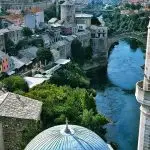
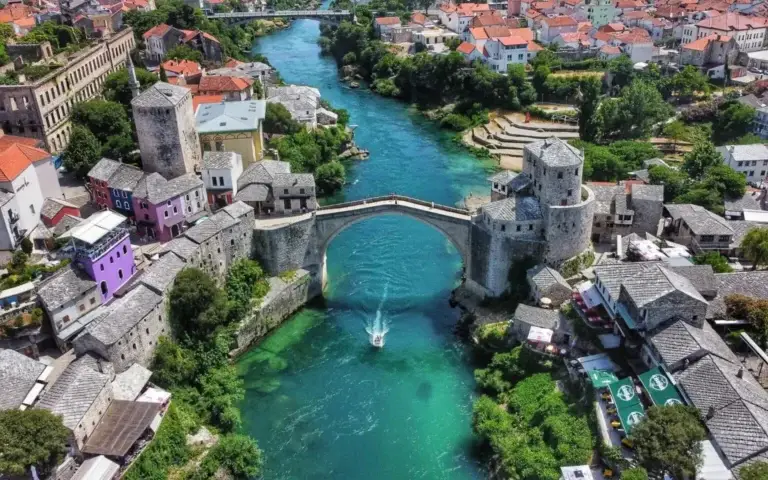
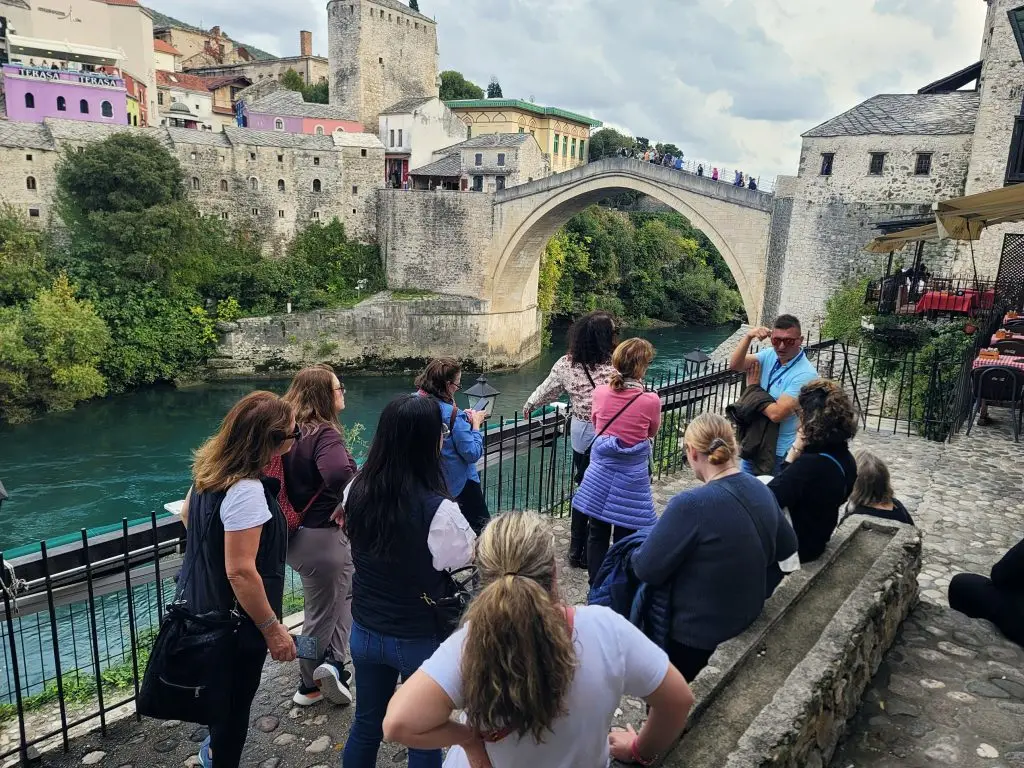
Mostar is famous for Stari Most, the Old Bridge. It was completed by Ottoman builders around 1566, destroyed during the war on 9 November 1993 and rebuilt with original techniques, reopening in July 2004. A year later UNESCO listed the Old Bridge area as a World Heritage site. In summer local divers still jump from the bridge into the Neretva, roughly 20 metres below. On the tour you walk the old town with a local guide, see the Koski Mehmed Pasha Mosque and have free time in the bazaar. More background is in our article Is Mostar Worth Visiting? Things to Do in Mostar.
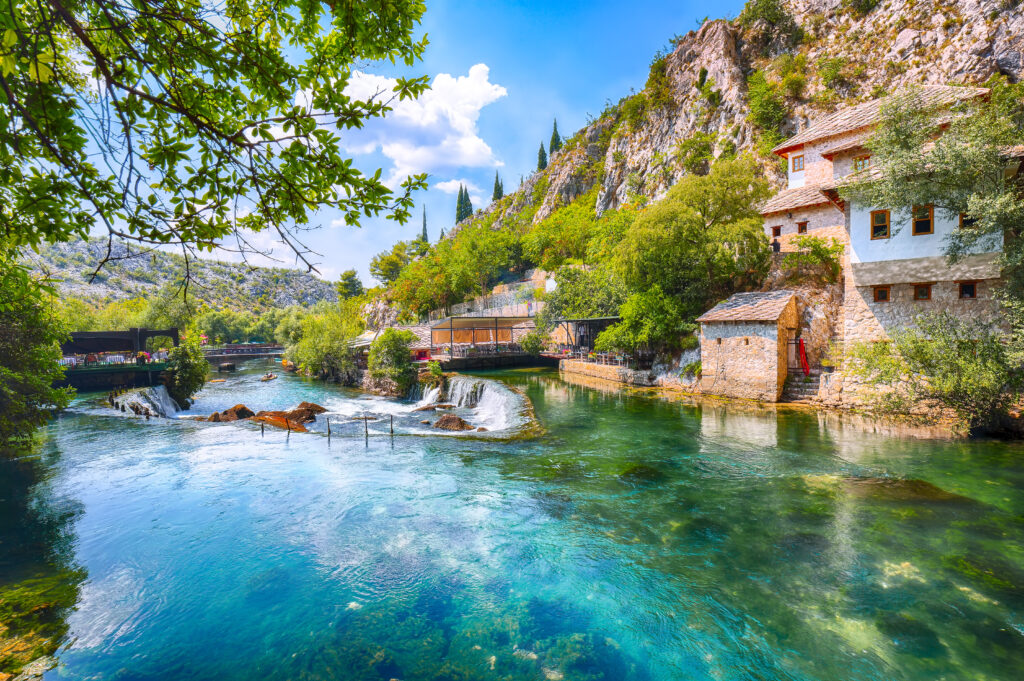
Twenty minutes from Mostar, the 16th-century Dervish House (tekke) of Blagaj stands under a cliff at the spring of the Buna river. The water comes straight out of the rock, cold and turquoise, and it is one of the most photographed places in Herzegovina.
Kravica is a wide amphitheatre of waterfalls on the Trebižat river. In summer you can swim in the pool below the falls, so pack a swimsuit if you travel between June and September. In spring the falls carry the most water.
Bosnia and Herzegovina touches the Adriatic for only about 9 km of coastal road, and Neum is the town on that strip. It is a quiet place to sleep by the sea before the coastal day, and it explains a small geography puzzle: the Croatian coast is split in two by this short Bosnian corridor.
Dubrovnik’s Old City has been on the UNESCO World Heritage list since 1979. Its stone walls run for about 1,940 metres around the old town, and many scenes of Game of Thrones were filmed in its streets and on its walls. With a local guide you walk the main street (Stradun), see the old pharmacy in the Franciscan monastery and the Rector’s Palace, then have free time to walk the walls or sit by the old harbour.
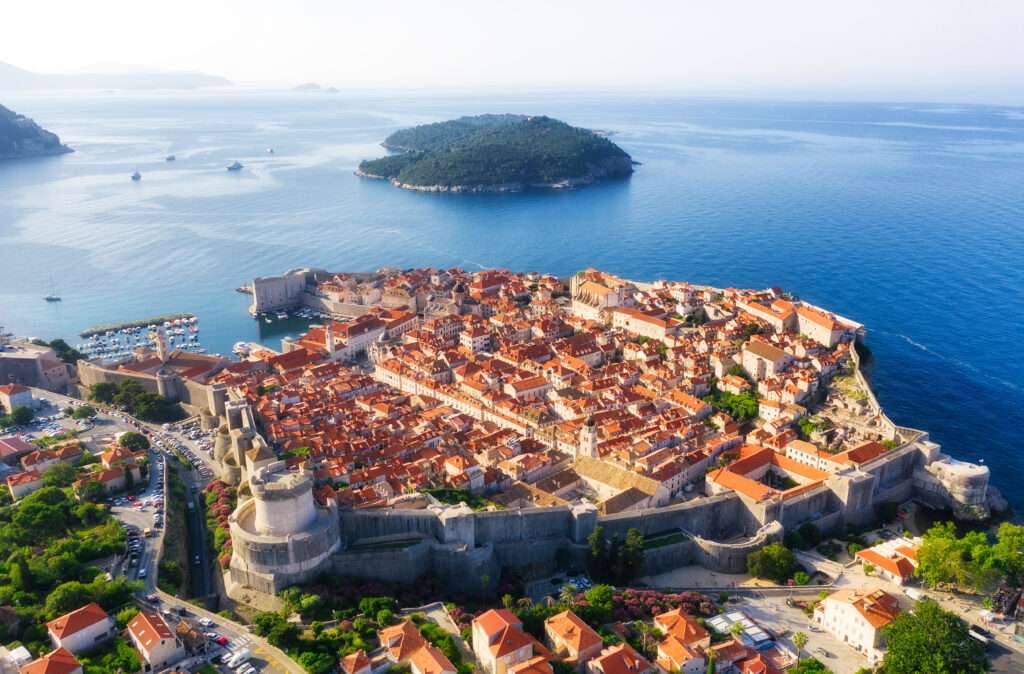
After crossing into Montenegro, the road follows the Bay of Kotor, a deep, winding bay between steep mountains that many people compare to a fjord. The Natural and Culturo-Historical Region of Kotor has been a UNESCO site since 1979. Kotor’s walled old town is a maze of small squares, churches and cats, and you spend about an hour and a half there.
Budva is Montenegro’s best-known beach town, with a small walled old town on the sea and a long promenade. You arrive in the evening, which is when the town is most lively.
About three hours from Budva, Tirana surprises most visitors. It is young, busy and full of cafés, with painted buildings and a past that is still visible. On the guided city walk you see Skanderbeg Square, the Et’hem Bey Mosque and the Clock Tower, Mother Teresa Square, the Pyramid of Tirana and some of the concrete bunkers built during the communist era. The afternoon is free for cafés, the markets or a walk in the Blloku district.
Lake Ohrid lies on the border of Albania and North Macedonia and is one of the oldest and deepest lakes in Europe, up to 288 metres deep. The town and the lake together are a UNESCO World Heritage site (listed in 1979, extended to the Albanian shore in 2019). With a local guide you visit the Church of St. Sofia, Samuel’s Fortress above the town, the old paper workshop and the shops selling Ohrid pearls. Then you take a one-hour boat ride on the lake, and the evening is free on the waterfront.
Skopje mixes an Ottoman old bazaar with a modern centre full of statues and new buildings. Mother Teresa was born here in 1910, and the memorial house stands on the main pedestrian street. The walking tour runs from the old railway station, whose clock still shows the time of the 1963 earthquake, across Macedonia Square and the Stone Bridge to the Old Bazaar, the Daut Pasha Hamam, the Mustafa Pasha Mosque and Kale Fortress.
The morning is free until the transfer to Skopje airport. If you have a later flight, the Old Bazaar is the best place for a last coffee.
In 2027 the small-group tour departs twice a month from late January to late October, 19 departures in total. Every departure starts on a Sunday in Sarajevo and ends on a Saturday in Skopje, so you can plan flights in and out easily. The full list of dates is on the tour page.
Seven days is enough for a first look at five countries, but it is a full week. You see the highlights of each place, not every corner. If you want more time at the sea or a slower pace, our 10-day Balkan itinerary covers a similar route over ten days, and our Western Balkans tour guide compares the main routes and how many days each needs. The same route can also run as a private tailor-made Balkan tour on any date.
Bosnia and Herzegovina, Croatia, Montenegro, Albania and North Macedonia, in that order, from Sarajevo to Skopje.
Between 130 and 250 km a day, with sightseeing stops in between. The longest leg is Sarajevo to Neum on day 2; Budva to Tirana is about three hours of driving.
Yes, when a departure already has other confirmed travellers. The minimum is two people, and solo travellers pay a single-room supplement. If a date does not reach the minimum, we can run it as a private tour.
Yes. All five countries on this route are safe for travellers. As in any tourist area, watch your belongings in crowded places such as Dubrovnik’s main street in summer.
Ready to see five countries in one week? Check the next departures and prices on the 7-Day Balkan Tour: 5 Countries page, or message us on WhatsApp and Elvis will answer your questions personally.
A curated list of the most popular travel packages based on different destinations.

A 10-day Balkan itinerary through Croatia, Bosnia and Herzegovina, Montenegro, Albania and North Macedonia: Dubrovnik, Mostar, Sarajevo, Kotor, Tirana, Lake Ohrid and Skopje.
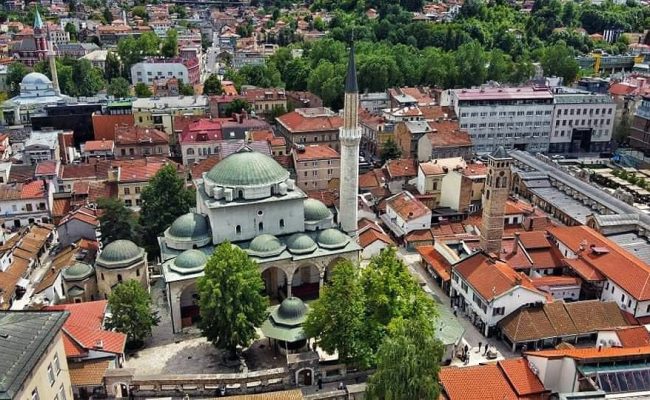
Halal food, mosques, prayer and Ramadan: a practical Muslim-friendly travel guide to Bosnia and Herzegovina, Albania, North Macedonia, Montenegro and Croatia.
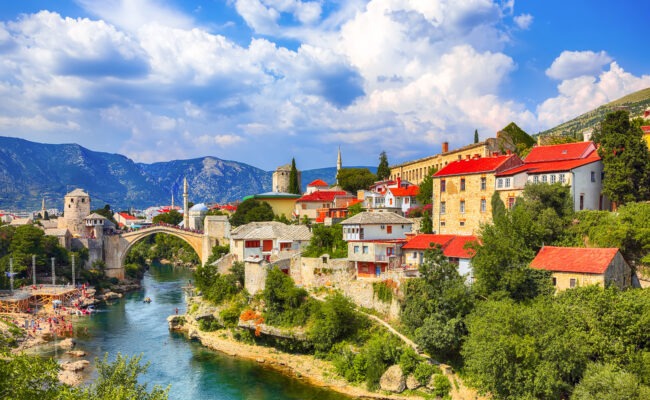
Is Mostar Worth Visiting? Things to Do in Mostar and How to Get There Yes, Mostar is worth visiting. It is the most photographed town in Bosnia and Herzegovina, built around the 16th-century Old Bridge (Stari Most) over the emerald Neretva river. The old town is small, so one full day is enough to see […]

Jajce, Bosnia: Things to Do in the Waterfall Town and How to Visit Jajce is a small medieval town in central Bosnia, famous for the Pliva Waterfall that drops right in the town centre into the Vrbas river. It was the last royal seat of the medieval Kingdom of Bosnia, so above the waterfall you […]
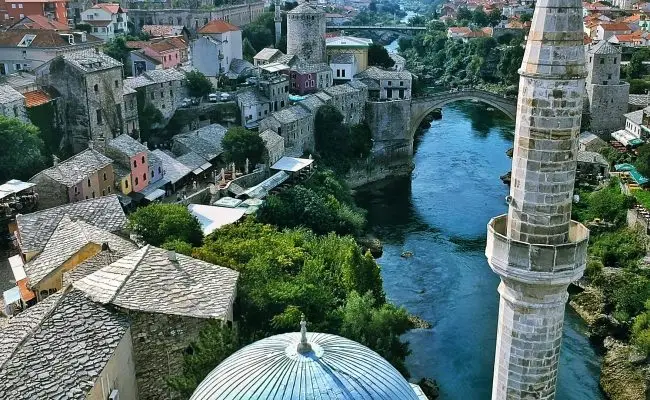
A 10-day Bosnia and Herzegovina itinerary from Sarajevo: Mostar, Herzegovina, Jajce, Travnik, Srebrenica and Bijambare, with distances and tips from local guides.

Is the Balkans Worth Visiting? Best Countries and Places to See Yes, the Balkans are worth visiting. In a small area you get the Adriatic coast of Croatia and Montenegro, Ottoman towns like Sarajevo and Mostar, lakes such as Bled and Ohrid, and some of the best-value travel in Europe. Distances are short, so in […]
Which countries are in the Western Balkans, how many days you need, three classic routes from Sarajevo, Zagreb and Dubrovnik, and practical tips from our local team.
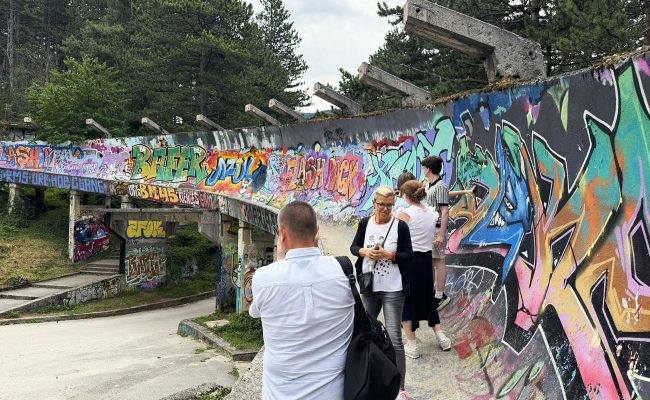
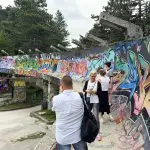
The abandoned 1984 Olympic bobsled track on Mount Trebević: its story, what happened in the war, how to get there and what to see nearby.