Is Bosnia Muslim-Friendly? Halal Travel Guide to Bosnia and the Balkans
Yes. Bosnia and Herzegovina is one of the most Muslim-friendly countries in Europe. About half of the population is Muslim, halal food is the norm rather than the exception, there are mosques in every town and the call to prayer still sounds over Sarajevo’s old town. Albania and North Macedonia are also easy for Muslim travellers, while on the Croatian coast and in most of Montenegro it takes a little more planning.
We are a local travel company from Sarajevo and plan halal-friendly trips for families and groups every season. This guide explains what to expect in each Balkan country: food, prayer, mosques, Ramadan and the places worth seeing.
Key takeaways
Bosnia and Herzegovina: Muslims are the largest community (50.7% in the 2013 census), and halal food is easy to find almost everywhere.
Halal products are certified by the Islamic Community’s own agency, set up in 2006.
Albania and North Macedonia have large Muslim populations and Ottoman old towns.
Croatia and much of Montenegro have few Muslims, so plan halal meals in advance there.
Ramadan in Sarajevo is special: iftar is announced by a cannon shot from the Yellow Fortress.
In Sarajevo and most of the Federation of Bosnia and Herzegovina, most restaurants serve halal meat, and the classic dishes are naturally halal: ćevapi (grilled minced meat in flatbread), burek and other pies, begova čorba (bey’s soup) and slow-cooked stews. Products and some restaurants carry the halal certificate of the Agency for Halal Quality Certification, which the Islamic Community in Bosnia and Herzegovina founded in 2006. Alcohol is sold in the country, but many restaurants in Baščaršija do not serve it at all.
In areas with a mostly Serb or Croat population, such as parts of eastern Herzegovina, ask before you order. A local guide will know which places to choose.
Mosques and Islamic heritage
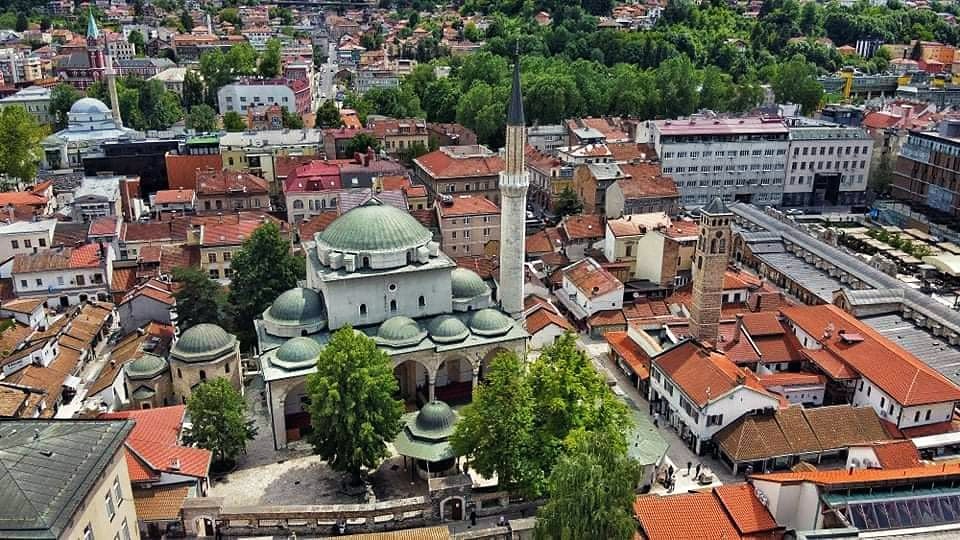
Gazi Husrev-beg Mosque, Sarajevo: the most important Ottoman mosque in the country, built in 1530–1531, with its madrasa and covered bazaar next door. It is still the main mosque of the city.
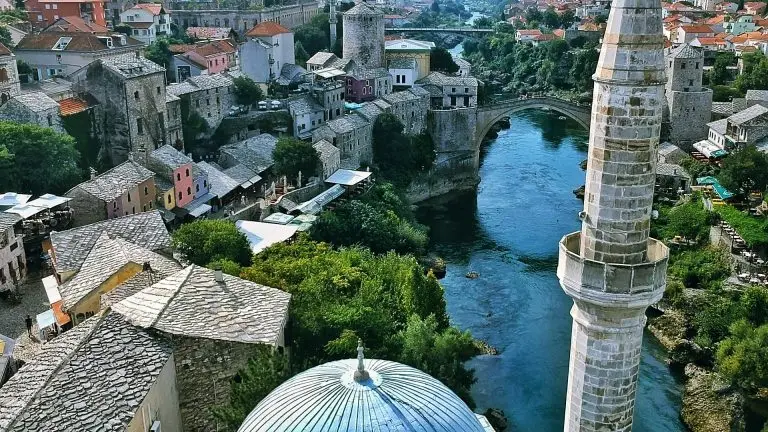
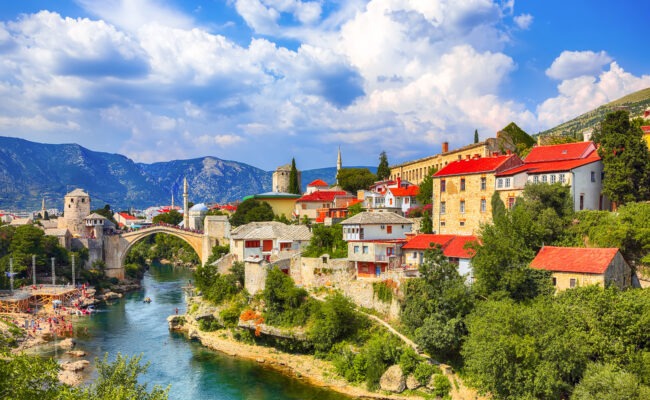
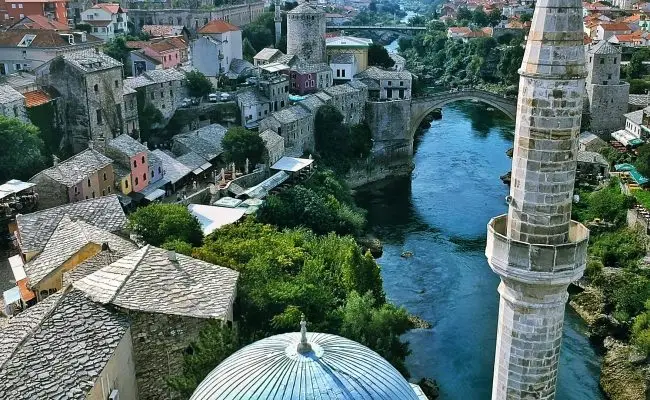
Koski Mehmed Pasha Mosque, Mostar: climb the minaret for the best view of the Old Bridge.
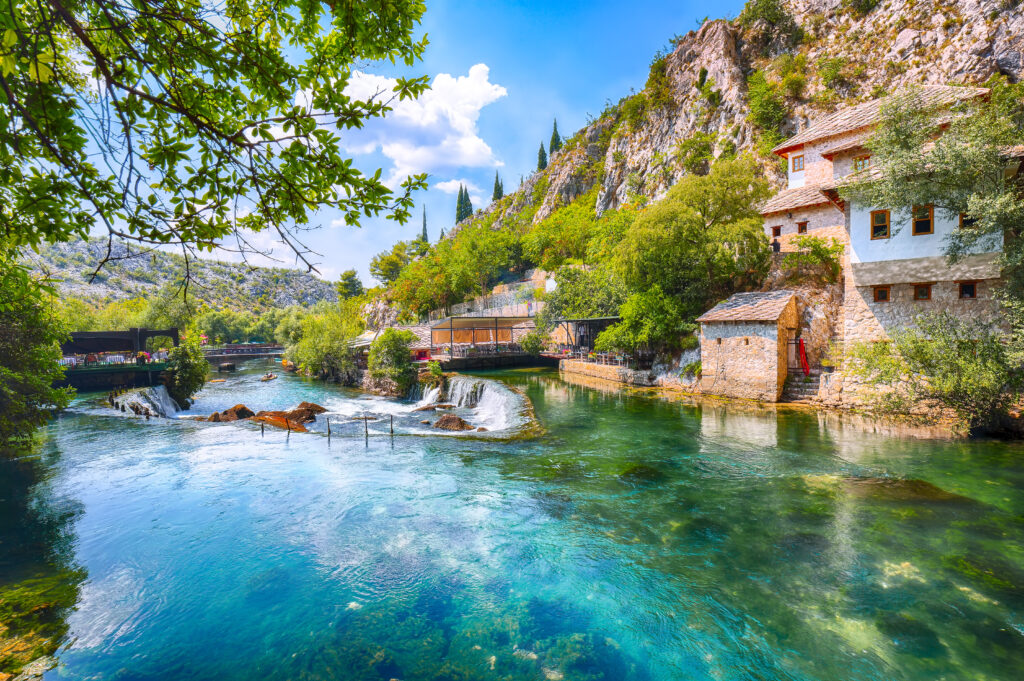
Blagaj Dervish House: a 16th-century tekke at the spring of the Buna river, still used by dervishes.
Colourful Mosque, Travnik: a small mosque with a painted facade in the town of the Ottoman viziers.
Mehmed Paša Sokolović Bridge, Višegrad: the 16th-century bridge on the UNESCO list, built by the great Ottoman architect Mimar Sinan.
Ramadan in Sarajevo
Ramadan is one of the most beautiful times to visit Sarajevo. Every evening a cannon shot from the Yellow Fortress (Žuta tabija) above the old town marks iftar, and families gather to watch it. Restaurants serve special iftar menus, the mosques are full for tarawih, and the old town stays busy late into the night. If you travel during Ramadan, we plan lighter days and finish the sightseeing before iftar.
Albania
Muslims are the largest religious community in Albania, and Islam here is relaxed and mixed with strong traditions of religious tolerance. Halal meat is common, and in Tirana you will find mosques next to churches in the centre. The Et’hem Bey Mosque on Skanderbeg Square, with its painted interior from the late Ottoman period, is the one to see.
North Macedonia
About a third of the population is Muslim, mostly in Skopje and the west of the country. Skopje’s Old Bazaar is one of the largest Ottoman bazaars in the Balkans, with the Mustafa Pasha Mosque above it and plenty of halal grills inside. In Ohrid, the town is mostly Christian, but there are mosques in the old town and halal options around the bazaar.
Montenegro and Croatia
On the Adriatic coast, Muslim communities are small. Kotor, Budva and Dubrovnik are seafood towns, so fish and vegetarian dishes are the easiest choice, and halal meat needs planning. Dubrovnik has a small mosque in the old town. In Montenegro, the Muslim community is larger in the north, around Rožaje and Plav, and in Ulcinj and Bar in the south. On our tours we arrange halal meals in advance for these parts of the route.
Practical tips for Muslim travellers
Prayer: mosques are open for prayer, and in Bosnia you are never far from one. Many hotels can give you the qibla direction, and prayer times are announced from the minarets.
Dress: in Sarajevo hijab is common and nobody looks twice. In mosques, both men and women should cover their shoulders and knees; women cover their hair.
Hotels: ask for a hotel near the old town in Sarajevo and Mostar, so you can walk to the mosques and halal restaurants.
Families: Bosnia is very family-friendly, with parks like Vrelo Bosne, the cable car to Trebević and mountain resorts close to Sarajevo.
Best season: many families from warmer countries come in summer, when Sarajevo and the mountains are pleasantly cooler than the coast.
Getting there: Sarajevo has year-round connections via Istanbul and seasonal direct flights from the Gulf. Check the current schedule when you plan.
Bosnia and Herzegovina is a secular state with three main communities. Muslims (Bosniaks) are the largest, at about half of the population, alongside Orthodox Serbs and Catholic Croats.
Is food in Sarajevo halal?
In most restaurants, yes. Traditional dishes such as ćevapi and burek are made with halal meat, and certified products carry the halal mark. If you are unsure, ask; restaurants are used to the question.
Can women wear hijab in Bosnia?
Yes. Hijab is common in Sarajevo and across Bosnia, and women wearing it are part of everyday life in the city.
Which Balkan countries are best for halal travel?
Bosnia and Herzegovina is the easiest, followed by Albania and North Macedonia. A route that combines them, with the coast of Croatia and Montenegro in between, works well if halal meals are arranged in advance on the coast.
Jajce, Bosnia: Things to Do in the Waterfall Town and How to Visit Jajce is a small medieval town in central Bosnia, famous for the Pliva Waterfall that drops right in the town centre into the Vrbas river. It was the last royal seat of the medieval Kingdom of Bosnia, so above the waterfall you […]
Is Mostar Worth Visiting? Things to Do in Mostar and How to Get There Yes, Mostar is worth visiting. It is the most photographed town in Bosnia and Herzegovina, built around the 16th-century Old Bridge (Stari Most) over the emerald Neretva river. The old town is small, so one full day is enough to see […]
Is the Balkans Worth Visiting? Best Countries and Places to See Yes, the Balkans are worth visiting. In a small area you get the Adriatic coast of Croatia and Montenegro, Ottoman towns like Sarajevo and Mostar, lakes such as Bled and Ohrid, and some of the best-value travel in Europe. Distances are short, so in […]
A 10-day Bosnia and Herzegovina itinerary from Sarajevo: Mostar, Herzegovina, Jajce, Travnik, Srebrenica and Bijambare, with distances and tips from local guides.
Which countries are in the Western Balkans, how many days you need, three classic routes from Sarajevo, Zagreb and Dubrovnik, and practical tips from our local team.
A 10-day Balkan itinerary through Croatia, Bosnia and Herzegovina, Montenegro, Albania and North Macedonia: Dubrovnik, Mostar, Sarajevo, Kotor, Tirana, Lake Ohrid and Skopje.
Where Is Medjugorje? Visitor Guide to Bosnia’s Pilgrimage Town Medjugorje (Međugorje) is a small town in Herzegovina, in the south of Bosnia and Herzegovina, about 25 km south-west of Mostar and close to the border with Croatia. It became one of the best-known Catholic pilgrimage places in Europe after six young people reported apparitions of […]