Where Is Medjugorje? Visitor Guide to Bosnia’s Pilgrimage Town
Medjugorje (Međugorje) is a small town in Herzegovina, in the south of Bosnia and Herzegovina, about 25 km south-west of Mostar and close to the border with Croatia. It became one of the best-known Catholic pilgrimage places in Europe after six young people reported apparitions of the Virgin Mary there in June 1981. Today it draws pilgrims from all over the world, especially in summer.
Key facts
Country: Bosnia and Herzegovina (Herzegovina region, municipality of Čitluk).
Distances: about 25 km from Mostar, 130 km from Dubrovnik and 150 km from Sarajevo.
Main sights: St. James Church, Apparition Hill (Podbrdo), Cross Mountain (Križevac) and the Blue Cross.
Church position: in September 2024 the Vatican approved public devotion to Mary, Queen of Peace, in Medjugorje, without declaring the apparitions supernatural.
Time needed: half a day for the main sights; pilgrims often stay several days.
Where is Medjugorje and how do you get there?
Medjugorje lies in the wine-growing hills of western Herzegovina, in the municipality of Čitluk. The nearest city is Mostar, about half an hour away by car. Most visitors arrive in one of these ways:
From Mostar: about 25 km, 30 minutes by car or taxi. Mostar has the closest airport and bus station.
From Dubrovnik or Split: about 130–160 km, two and a half to three hours by road, with a border crossing between Croatia and Bosnia and Herzegovina.
From Sarajevo: about 150 km, roughly two and a half hours, along the scenic Neretva canyon via Mostar.
With a tour: a private driver lets you combine Medjugorje with Mostar, Počitelj and the Kravica Waterfalls in one day.
Why is Medjugorje famous?
On 24 June 1981, six young people from the village said that the Virgin Mary appeared to them on a hillside above Medjugorje, and some of them say the apparitions continue. The town grew from a farming village into a pilgrimage centre visited by people of many nationalities. The Catholic Church has been cautious: in September 2024 the Vatican published a note recognising the spiritual fruits of Medjugorje and allowing public devotion to “Mary, Queen of Peace”, while not declaring the apparitions themselves supernatural.
What to see in Medjugorje
St. James Church
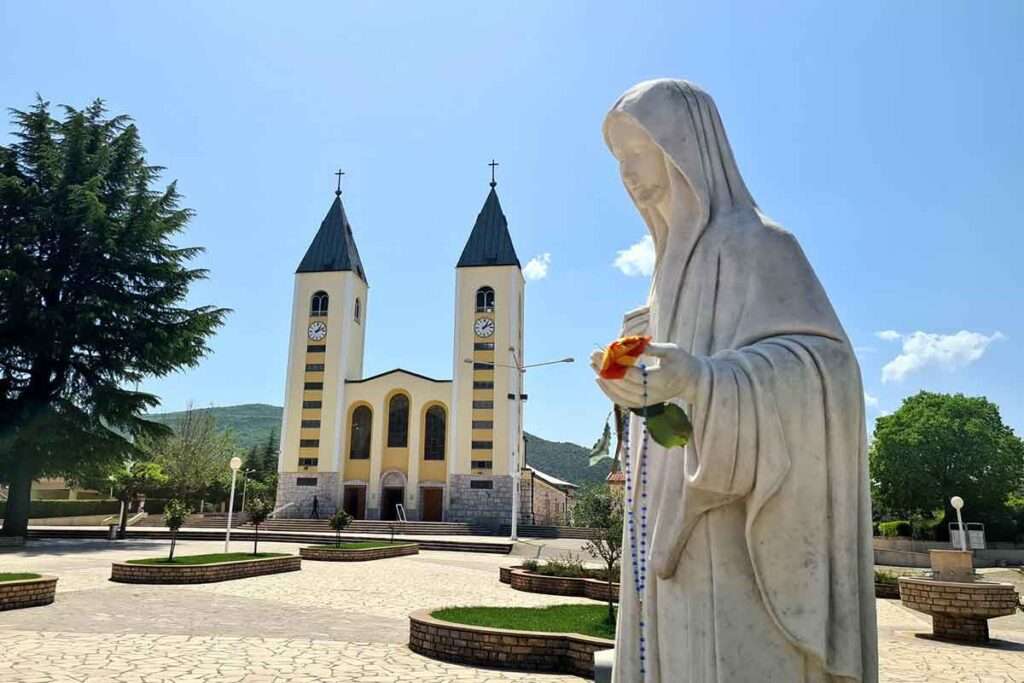
The twin-towered parish church is the centre of Medjugorje. Masses are held in many languages through the day, and in summer the large outdoor altar behind the church is used for the evening programme. Even if you are not a pilgrim, it is worth seeing the atmosphere here in the evening.
Apparition Hill (Podbrdo) and the Blue Cross
This rocky hill is where the visionaries said they first saw the Virgin Mary. A path with bronze reliefs of the mysteries of the rosary leads up to a white statue of Mary at the top, which takes about 20–30 minutes. At the foot of the hill, the Blue Cross marks a place where prayer meetings were held in the early years and is still a quiet spot for prayer.
Cross Mountain (Križevac)
A large concrete cross was built on the summit of Križevac by the villagers in 1933, long before the apparitions. Pilgrims climb the steep, stony path past the Stations of the Cross, about an hour up. The views over the vineyards of Herzegovina are wide, but wear proper shoes and avoid the midday heat in summer.
Adoration Chapel and the Risen Christ statue
Near the church you will find the Adoration Chapel for silent prayer and the bronze statue of the Risen Christ, which many pilgrims visit. The town itself is small and easy to walk, with plenty of guesthouses, cafés and religious shops along the main street.
When is the best time to visit Medjugorje?
The busiest times are summer, the anniversary of the first apparition in late June and the international Youth Festival in early August, when the town is full. For a quieter visit, come in spring (April–May) or autumn (September–October), when the weather is mild and the climbs are easier. Herzegovina is very hot in July and August, so climb Križevac early in the morning.
Visiting Medjugorje on a trip through Bosnia
Medjugorje fits easily into a day in Herzegovina. A popular route is Mostar and the Old Bridge in the morning, Medjugorje around midday and the Kravica Waterfalls or the stone town of Počitelj in the afternoon. Our Mostar and Herzegovina tour covers Mostar, Blagaj, Počitelj and Kravica, and on a private Bosnia tour we can plan the day around Medjugorje. For a longer trip, see our 10-day Bosnia itinerary.
Medjugorje is in Bosnia and Herzegovina, in the Herzegovina region. Many visitors arrive via Croatia because Dubrovnik and Split are the nearest large airports on the coast.
How far is Medjugorje from Mostar?
About 25 km, or around 30 minutes by car. Many visitors see both on the same day.
Is Medjugorje approved by the Catholic Church?
In 2024 the Vatican allowed public devotion and pilgrimages to Mary, Queen of Peace, in Medjugorje and recognised the spiritual fruits of the place, but it did not declare the reported apparitions supernatural.
How much time do I need in Medjugorje?
Half a day is enough to see the church and climb Apparition Hill. If you want to climb Cross Mountain and attend the evening programme, plan a full day or stay overnight.
Jajce, Bosnia: Things to Do in the Waterfall Town and How to Visit Jajce is a small medieval town in central Bosnia, famous for the Pliva Waterfall that drops right in the town centre into the Vrbas river. It was the last royal seat of the medieval Kingdom of Bosnia, so above the waterfall you […]
Which countries are in the Western Balkans, how many days you need, three classic routes from Sarajevo, Zagreb and Dubrovnik, and practical tips from our local team.
Planning a tailor-made Balkan trip? Our local guide covers the best time to go, how many days you need, classic routes, border crossings, hotels and budget.
A day-by-day 7-day Bosnia and Herzegovina itinerary covering Sarajevo, Mostar, Blagaj, Kravica waterfalls, Jajce and more, with travel tips from local guides.
Best Day Trips from Sarajevo: 7 Places Worth the Drive The best day trips from Sarajevo are Mostar and Herzegovina (Old Bridge, Blagaj, Počitelj, Kravica Waterfalls) and Travnik with Jajce (Ottoman town, royal fortress, Pliva Waterfall). Both are about two and a half hours away and take a full day. Closer to the city you […]
Five classic Balkan routes to travel with a private driver-guide, from Sarajevo to Dubrovnik via Mostar to Kotor, Tirana and Lake Ohrid, with stops and tips.
How to travel from Dubrovnik to Sarajevo by bus, car or private driver, the two best routes, and the stops worth making on the way: Mostar, Počitelj, Blagaj and Kravica.
Should you book a private or a group tour in Sarajevo? We compare price, pace, flexibility and who each option suits best, from solo travellers to families.