Is Bosnia Muslim-Friendly? Halal Travel Guide to Bosnia and the Balkans
Halal food, mosques, prayer and Ramadan: a practical Muslim-friendly travel guide to Bosnia and Herzegovina, Albania, North Macedonia, Montenegro and Croatia.

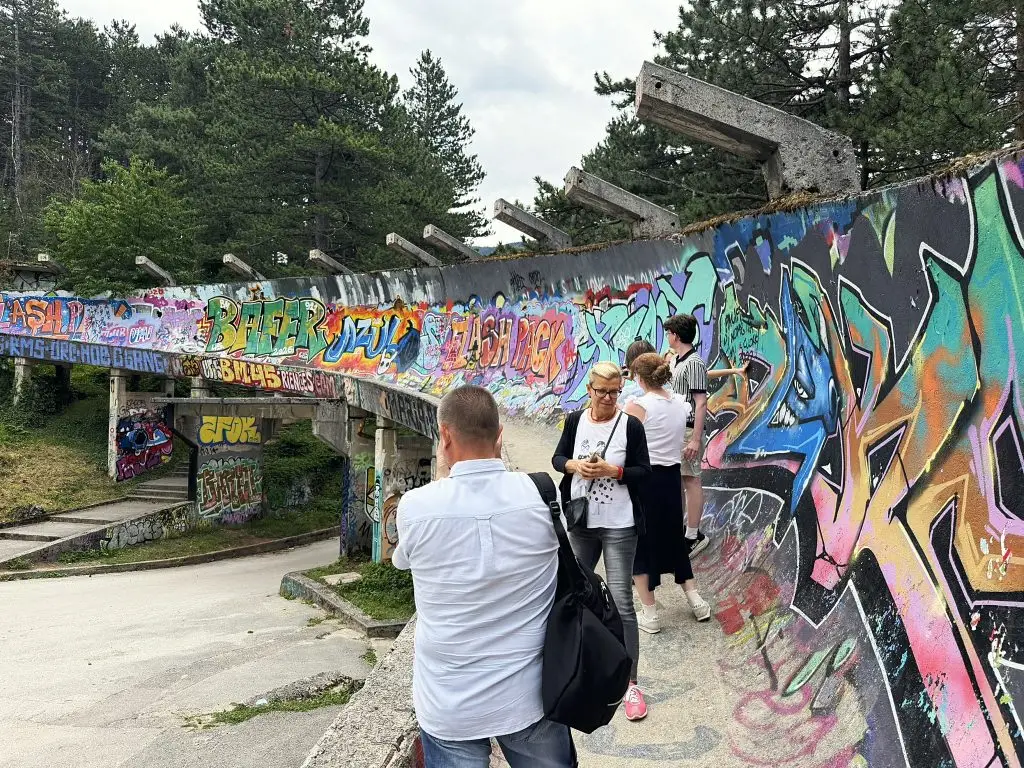
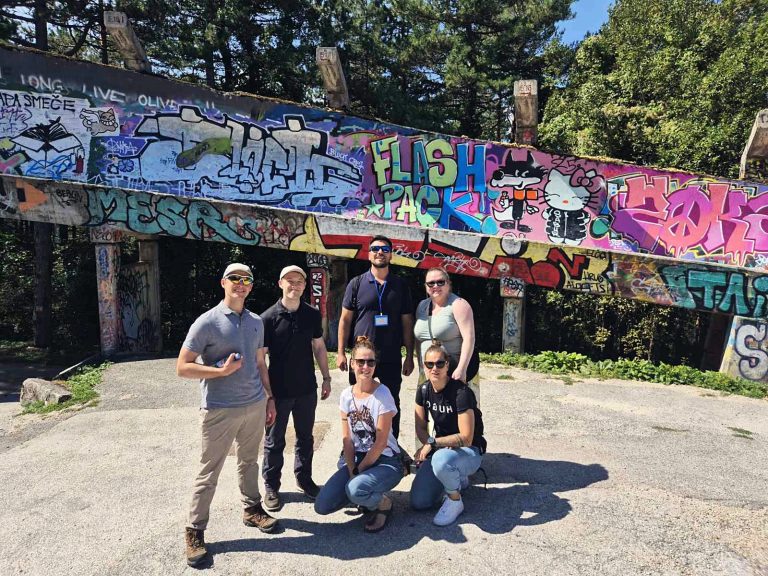
The Sarajevo bobsled track is the abandoned concrete run built for the 1984 Winter Olympics on Mount Trebević, just above the city. Today it is covered in graffiti, free to visit and one of the most unusual sights in the Balkans. You can reach it by the Trebević cable car or by road, and an hour is enough to walk a good part of it.
Our guides bring visitors here on the Sarajevo Grand Tour, so this guide covers what we tell them on the track: its Olympic story, what happened to it during the war, how to get there on your own and what else to see on the way down.
Recommended tour
5 hours · bobsled track, Tunnel of Hope, Yellow Fortress and Old Town · hotel pickup · from €49 per person
View tourKey takeaways
The Sarajevo Olympic Bobsleigh and Luge Track is a concrete ice channel that winds down the forested slope of Trebević. Work started in June 1981 and finished in September 1982, so the track could host test events before the 1984 Winter Olympics, when Sarajevo became the first city in a socialist country to host the Winter Games. Bobsleigh and luge races were held here in February 1984.
| Built | 1981–1982 |
| Used for racing | 1982–1992 (Olympics in February 1984) |
| Length | 1,300 m for bobsleigh |
| Curves | 13 |
| Vertical drop | about 126 m |
| Entrance | Free, open all year |
Less than ten years after the Olympics, Trebević became part of the front line of the siege of Sarajevo. Bosnian Serb forces used the bobsled track as an artillery position, and you can still see holes drilled into the concrete of one of the last curves as firing positions. From up here you understand how exposed the city below was, which is why we always pair this stop with the Tunnel of Hope on the same tour.
After the war the track was left to the forest. Local and visiting artists turned it into an open-air graffiti gallery, and in 2025 an educational trail with 13 information panels was added along the run. Plans to rebuild it for racing have been discussed several times but have not gone ahead.
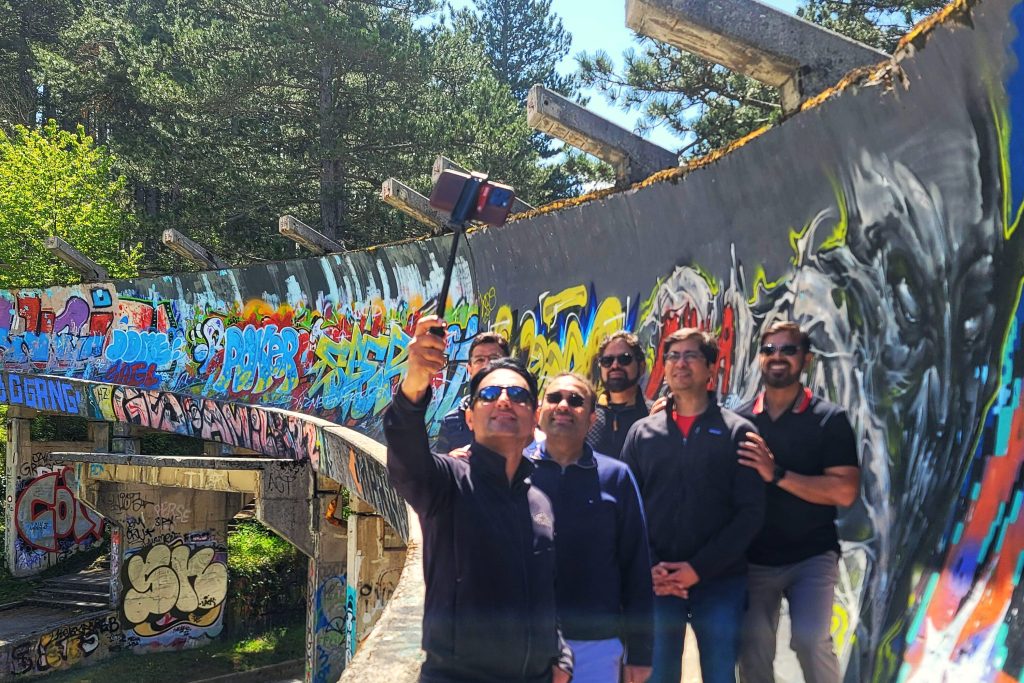
Trebević rises directly above the Old Town. Before the war it was where Sarajevo families went for picnics, walks and fresh air, and since the cable car came back it has become that again. The mountain is forested, a few degrees cooler than the city in summer, and has some of the best views over Sarajevo and the surrounding hills.
The Trebević cable car first opened in 1959 and was destroyed in the war. It reopened in April 2018, after 26 years, with new cabins that leave from the Bistrik area, a short walk from Baščaršija. The ride up takes about seven minutes and gives you the classic view of the city spread across the valley.
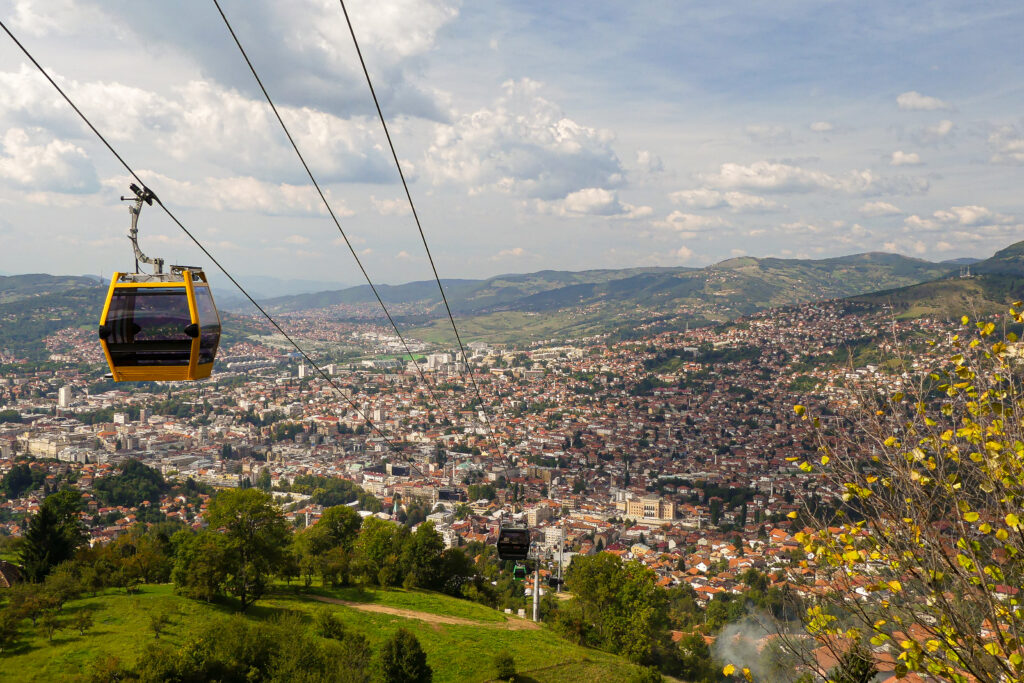
Sephardic Jews founded this cemetery on the slope of Trebević around 1630. With more than 3,850 graves it is the largest Jewish cemetery in Southeast Europe and, as a burial complex, one of the largest in Europe. During the siege it lay directly on the front line and was used as a firing position, and many gravestones still carry bullet marks. Today it is a protected national monument of Bosnia and Herzegovina.
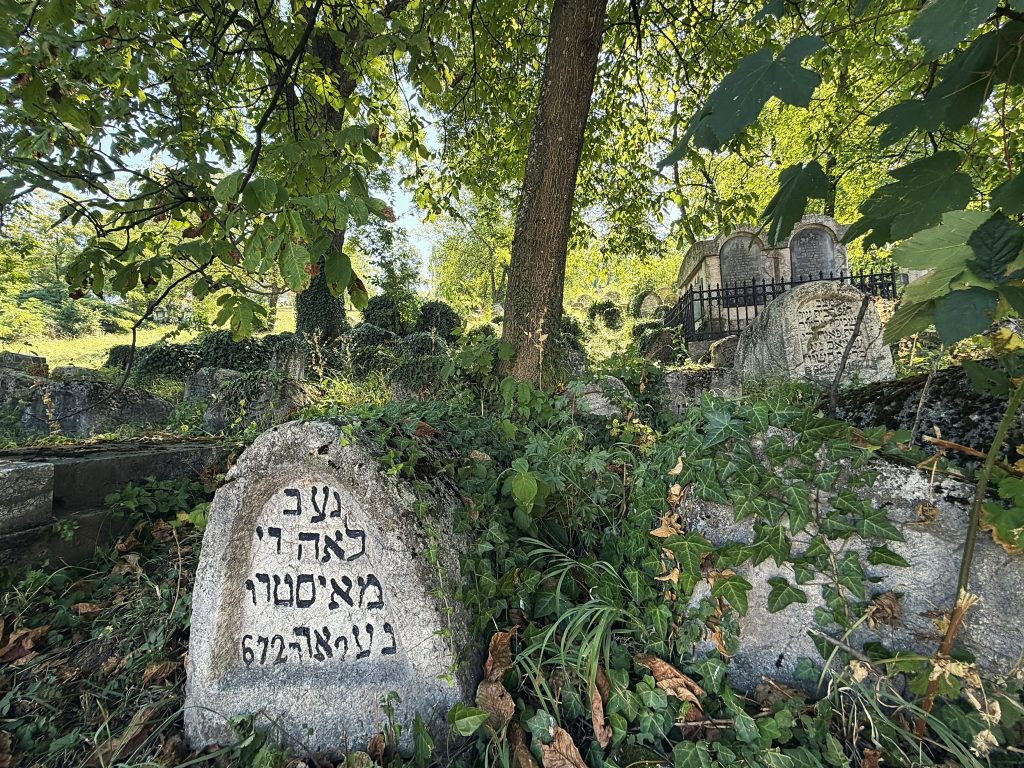
The Yellow Fortress is an Ottoman bastion on the hill above the Old Town and the most popular viewpoint in Sarajevo, especially at sunset. From its walls you see Baščaršija, the minarets and the whole valley, and you can point out where the front lines ran during the siege. It is the last stop before the guided Old Town walk on our Grand Tour.
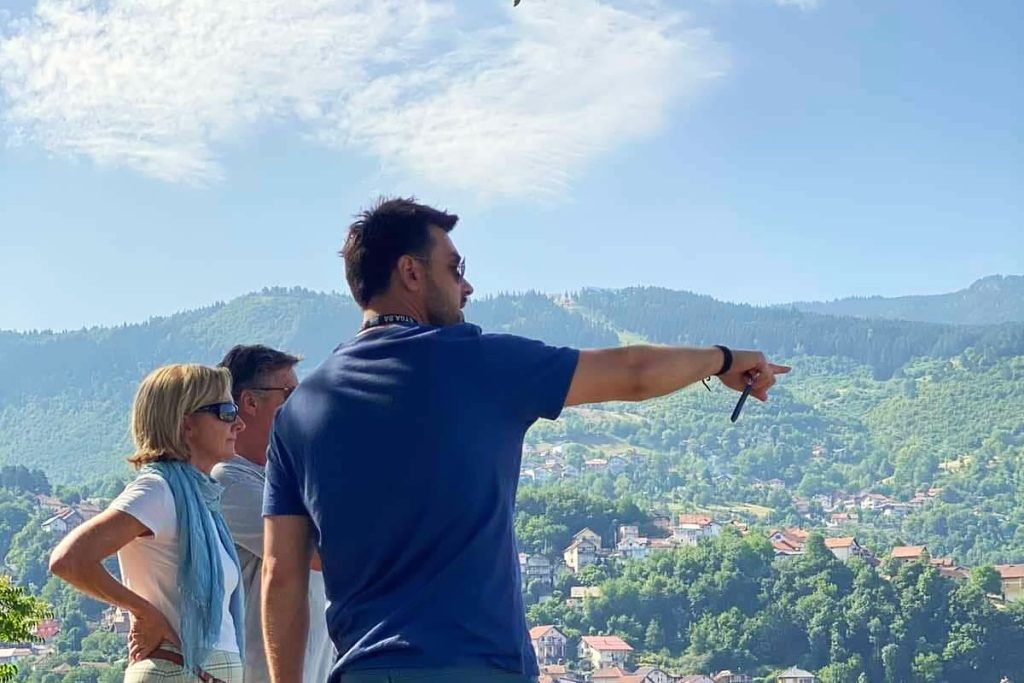
Walking the track on your own is easy, but it means much more when someone who grew up in Sarajevo tells you what happened on this mountain. On the Sarajevo Grand Tour we combine the bobsled track, the Old Jewish Cemetery and the Yellow Fortress with the Tunnel of Hope museum (ticket included) and a two-hour walk through the Old Town, all in about five hours with hotel pickup. It runs twice a day, at 9:00 and 14:30, and can also be booked as a private tour.
Planning more time in the city? Read How Many Days in Sarajevo? and Sarajevo in a Day: Top 10 Sights.
Yes. The track is in the open on Mount Trebević, with no ticket, gate or opening hours. You only pay for the cable car or transport to get there.
Yes, most visitors walk inside the concrete channel and through the curves. Take care on wet or icy sections.
It is on the mountain directly above the Old Town. The cable car ride from Bistrik takes about seven minutes, and by car it is a short drive on the mountain road.
Our Sarajevo Grand Tour and Sarajevo War Tour both stop at the bobsled track, together with the Tunnel of Hope and the Yellow Fortress.
A curated list of the most popular travel packages based on different destinations.
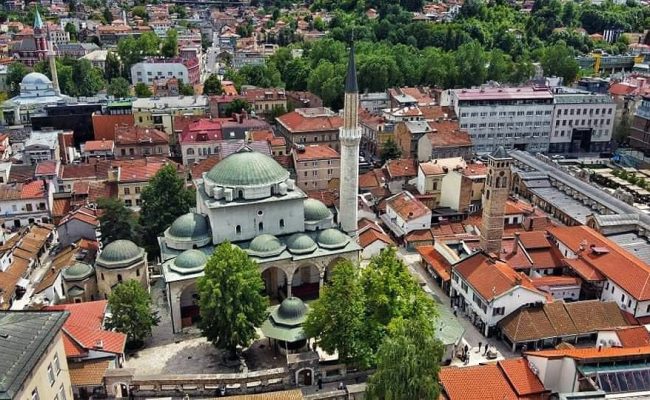
Halal food, mosques, prayer and Ramadan: a practical Muslim-friendly travel guide to Bosnia and Herzegovina, Albania, North Macedonia, Montenegro and Croatia.

Is the Balkans Worth Visiting? Best Countries and Places to See Yes, the Balkans are worth visiting. In a small area you get the Adriatic coast of Croatia and Montenegro, Ottoman towns like Sarajevo and Mostar, lakes such as Bled and Ohrid, and some of the best-value travel in Europe. Distances are short, so in […]
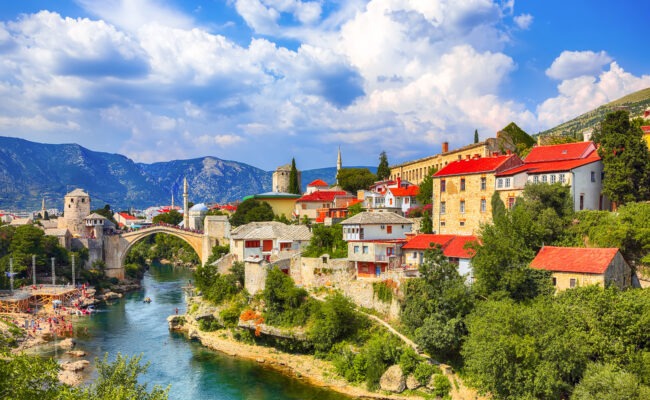
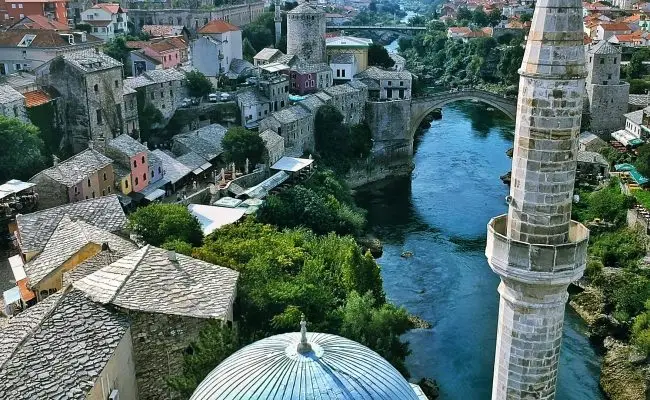
Is Mostar Worth Visiting? Things to Do in Mostar and How to Get There Yes, Mostar is worth visiting. It is the most photographed town in Bosnia and Herzegovina, built around the 16th-century Old Bridge (Stari Most) over the emerald Neretva river. The old town is small, so one full day is enough to see […]

Jajce, Bosnia: Things to Do in the Waterfall Town and How to Visit Jajce is a small medieval town in central Bosnia, famous for the Pliva Waterfall that drops right in the town centre into the Vrbas river. It was the last royal seat of the medieval Kingdom of Bosnia, so above the waterfall you […]
Which countries are in the Western Balkans, how many days you need, three classic routes from Sarajevo, Zagreb and Dubrovnik, and practical tips from our local team.
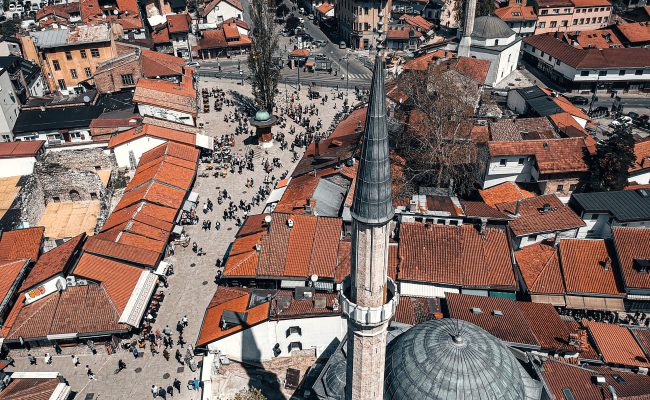
A 7-day Balkan itinerary through Bosnia, Croatia, Montenegro, Albania and North Macedonia: every stop from Sarajevo to Skopje explained by local guides.
A 10-day Bosnia and Herzegovina itinerary from Sarajevo: Mostar, Herzegovina, Jajce, Travnik, Srebrenica and Bijambare, with distances and tips from local guides.

A 10-day Balkan itinerary through Croatia, Bosnia and Herzegovina, Montenegro, Albania and North Macedonia: Dubrovnik, Mostar, Sarajevo, Kotor, Tirana, Lake Ohrid and Skopje.