What Is Bosnia and Herzegovina Famous For? 12 Things to Know
Bosnia and Herzegovina is famous for the Old Bridge in Mostar, for Sarajevo, where East meets West and where the First World War was triggered in 1914, and for its food, coffee culture and hospitality. It is also known for green rivers, waterfalls and mountains, the 1984 Sarajevo Winter Olympics, the war of the 1990s, and its mix of mosques, churches and synagogues side by side. For travellers it is one of the best-value countries in Europe.
In short
Landmarks: the Old Bridge in Mostar and the bridge in Višegrad, both UNESCO World Heritage sites.
History: Ottoman and Austro-Hungarian heritage, the 1914 assassination, the 1984 Olympics, the siege of Sarajevo.
Food: ćevapi, burek and Bosnian coffee.
Nature: the Neretva, Una and Drina rivers, Kravica and Pliva waterfalls, Europe’s primeval forest at Perućica.
What landmarks is Bosnia famous for?
1. The Old Bridge in Mostar
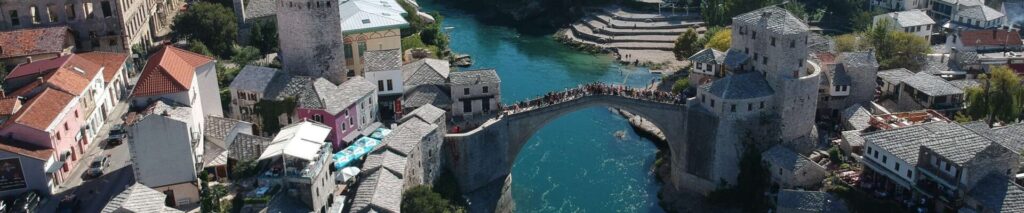
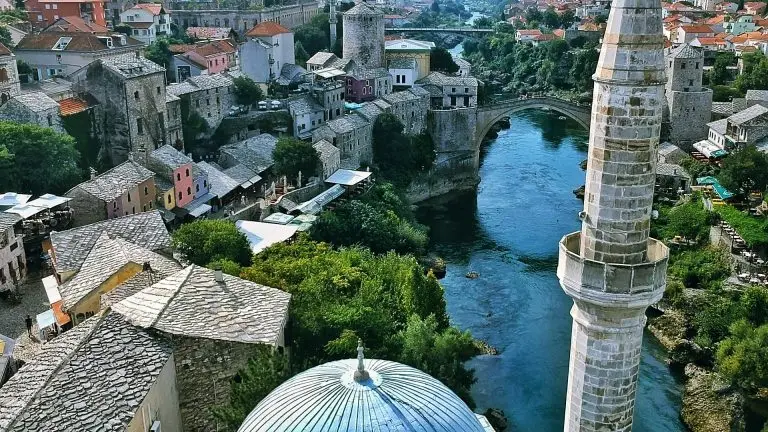
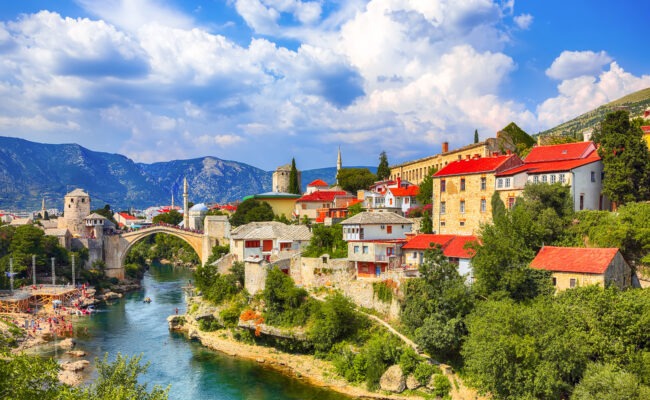
The 16th-century Ottoman bridge over the Neretva is the country’s best-known image. It was destroyed in 1993, rebuilt in 2004 and listed by UNESCO in 2005, and local divers still jump from it into the river. See things to do in Mostar.
2. The bridge on the Drina in Višegrad
The Mehmed Paša Sokolović Bridge, built in the 1570s, is a UNESCO site and the subject of Ivo Andrić’s novel The Bridge on the Drina. Andrić, born near Travnik, won the Nobel Prize in Literature in 1961.
3. Stećci, the medieval tombstones
Thousands of carved medieval stone tombstones are scattered across the country. In 2016 UNESCO listed them as World Heritage, shared with Croatia, Montenegro and Serbia. Radimlja near Stolac is one of the best sites to see them.
What is Sarajevo famous for?
4. Where East meets West
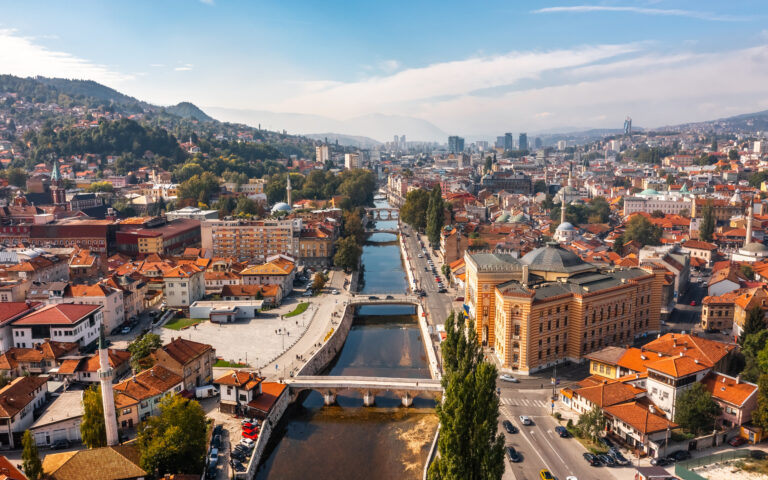
In the old town you can walk from the Ottoman bazaar of Baščaršija into Austro-Hungarian streets in a few steps, and a mosque, an Orthodox church, a Catholic cathedral and a synagogue stand within a short walk of each other, which is why Sarajevo is sometimes called the “Jerusalem of Europe”.
5. The assassination that started the First World War
On 28 June 1914, Archduke Franz Ferdinand of Austria was shot by Gavrilo Princip at the Latin Bridge. The event led to the outbreak of the First World War.
6. The 1984 Winter Olympics
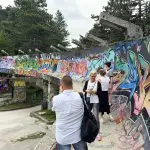
Sarajevo hosted the 14th Winter Olympics. The ski slopes of Jahorina and Bjelašnica are still in use, and the abandoned bobsled track on Trebević is now covered in graffiti and one of the city’s most photographed places.
7. The siege and the Tunnel of Hope
From 1992 to 1996 Sarajevo was under siege for almost four years, the longest siege of a capital city in modern warfare. The Tunnel of Hope under the airport was the city’s lifeline, and today about 100 metres of it can be walked through at the museum.
What food is Bosnia famous for?
8. Ćevapi, burek and Bosnian coffee
Ćevapi, small grilled meat rolls served in somun flatbread with onions and kajmak, are the national dish. Burek, flaky pastry filled with meat, is the classic breakfast, and Bosnian coffee, served in a copper džezva with a sugar cube and rahat lokum, is a ritual meant to be enjoyed slowly. Our halal travel guide covers food for Muslim visitors.
9. Hospitality
Bosnians are known for welcoming guests generously, and visitors often say the people are the highlight of the trip. Prices for food, transport and accommodation are low compared with Western Europe.
What is Bosnia’s nature famous for?
10. Rivers and waterfalls
The emerald Neretva, the Una and the Drina are among the cleanest rivers in Europe and popular for rafting. The country is full of waterfalls: Kravica near Mostar, Štrbački buk in Una National Park and the Pliva Waterfall in the centre of Jajce.
11. Mountains and primeval forest
More than half of the country is mountains and forest. Sutjeska National Park protects Perućica, one of the last primeval forests in Europe, and remote highland villages like Lukomir still keep a traditional way of life.
12. Medjugorje and the Dervish House of Blagaj
Bosnia’s spiritual sites draw visitors of all faiths: Medjugorje, a Catholic pilgrimage town, and the 16th-century Dervish House at the spring of the Buna river in Blagaj.
How can you see the best of Bosnia?
A week is enough to see Sarajevo, Mostar, Jajce and Travnik with a few natural highlights; see our 7-day Bosnia itinerary. To travel with hotels, transport and local guides arranged, browse our Bosnia tour packages.
Best Day Trips from Sarajevo: 7 Places Worth the Drive The best day trips from Sarajevo are Mostar and Herzegovina (Old Bridge, Blagaj, Počitelj, Kravica Waterfalls) and Travnik with Jajce (Ottoman town, royal fortress, Pliva Waterfall). Both are about two and a half hours away and take a full day. Closer to the city you […]
Sarajevo in One Day: 10 Sights and a Walking Route Yes, you can see the highlights of Sarajevo in one day. Spend the morning walking the old town, from the City Hall through Baščaršija, the Gazi Husrev-beg Mosque and the “Meeting of Cultures” line to the Latin Bridge, then use the afternoon for either the […]
Jajce, Bosnia: Things to Do in the Waterfall Town and How to Visit Jajce is a small medieval town in central Bosnia, famous for the Pliva Waterfall that drops right in the town centre into the Vrbas river. It was the last royal seat of the medieval Kingdom of Bosnia, so above the waterfall you […]
A day-by-day 7-day Bosnia and Herzegovina itinerary covering Sarajevo, Mostar, Blagaj, Kravica waterfalls, Jajce and more, with travel tips from local guides.
Is Sarajevo Worth Visiting? 15 Things to Do in Sarajevo Yes, Sarajevo is worth visiting. The capital of Bosnia and Herzegovina packs Ottoman bazaars, Austro-Hungarian streets, the spot where the First World War began, the 1984 Olympic mountains and the moving story of the 1990s siege into one compact, affordable city. The top things to […]
Is Mostar Worth Visiting? Things to Do in Mostar and How to Get There Yes, Mostar is worth visiting. It is the most photographed town in Bosnia and Herzegovina, built around the 16th-century Old Bridge (Stari Most) over the emerald Neretva river. The old town is small, so one full day is enough to see […]
Where Is Medjugorje? Visitor Guide to Bosnia’s Pilgrimage Town Medjugorje (Međugorje) is a small town in Herzegovina, in the south of Bosnia and Herzegovina, about 25 km south-west of Mostar and close to the border with Croatia. It became one of the best-known Catholic pilgrimage places in Europe after six young people reported apparitions of […]